

How to improve running form when running starts to feel off
There is a moment many runners recognize, even if they never put it into words. You are still training, still showing up, still running the miles, but something no longer feels the same. Effort feels heavier than it should. Your stride feels slightly disconnected. Paces that once felt controlled now require more attention. Nothing is clearly broken, yet running no longer feels natural.
This is usually when questions about form appear. Not because you suddenly want perfect technique, but because your body feels less efficient than before. You start wondering whether you are wasting energy, if fatigue is setting in too early, or if your movement is quietly breaking down without your noticing.
Before we go deeper, a bit of context. I am Coach Kari, founder of BeFit Runners. BeFit was created as a platform where runners can work with online running coaches and understand their training, bodies, and running form in a single process. We also offer personalized and data-driven online marathon coaching, where training structure, recovery, and form development are addressed together rather than in isolation.
Running form is not something separate from training. It is shaped by how sessions are structured, how fatigue accumulates, and how consistently the body is allowed to adapt over time, a principle that sits at the core of advanced endurance training.

What good running form looks like and how to improve it
Good running form is not about chasing a perfect image. It’s about moving in a way that feels efficient, repeatable, and calm under fatigue. Proper form minimizes wasted energy and helps your stride hold together even when tired. The goal is not to look fast, it’s to run economically and sustainably.
Strong running form usually includes:
- A tall but relaxed posture, with your head, shoulders, hips, and ankles roughly aligned.
- A slight forward lean from the ankles, not the waist.
- Quick, light steps with consistent rhythm.
- Relaxed arms swinging close to your sides, driving from the shoulders, not the elbows.
- Smooth, quiet landings, not heavy foot strikes.
Head and eye position
Your head guides your posture more than most runners realize. When it drops forward or tilts down, your entire alignment follows, shoulders round, core disengages, and breathing becomes restricted.
To improve it:
- Keep your gaze forward, roughly 10–15 meters ahead.
- Let your chin stay neutral, not lifted or tucked.
- Keep your jaw loose and eyes soft; tension in the face often spreads to the neck and shoulders.
Arm swing and shoulder relaxation
Your arms help balance every stride. If they swing too wide, or if your shoulders tighten, energy leaks upward instead of driving forward.
To improve it:
- Keep elbows bent around 90 degrees.
- Swing your arms forward and slightly inward, brushing close to your torso.
- Avoid crossing the midline; it unnecessarily twists your torso.
- Relax your hands, imagine holding a potato chip without breaking it.
Foot strike and cadence connection
There is no single “perfect” foot strike. What matters is where your foot lands in relation to your body and how quickly you move through the ground contact.
To improve it:
- Their foot lands roughly beneath their center of mass, not far in front.
- They maintain a light, midfoot or slightly rearfoot contact depending on pace.
- Cadence (steps per minute) stays consistent, typically between 170–180 for most distance runners, though this varies.
Think of cadence as your body’s internal metronome. A slightly higher cadence usually shortens stride length, reduces braking forces, and decreases injury risk. You don’t need to force it; instead, introduce short strides or cadence-focused drills (like 30-second pickups or metronome runs) to help your rhythm adjust naturally.

Why does improving running technique take time?
Improving running technique requires patience because it involves neurological adaptation, not just muscular change. Movement patterns are deeply ingrained, especially in experienced runners.
When you introduce a technical adjustment, it often feels awkward at first. That discomfort is not a sign of failure. It is part of the adaptation process. The nervous system needs repeated, consistent exposure to reorganize coordination efficiently.
This is why structured progression matters. Technique improves when the body is challenged, allowed to rest, and then exposed again at a slightly higher level, following the same adaptation principles that guide endurance training itself.
Fatigue reveals what your form is built on
If you want honest information about your running form, look at what happens late in a run or toward the end of a demanding training week. Early miles rarely tell the full story.
As fatigue accumulates, your body defaults to its strongest and most familiar patterns. If strength, stability, or endurance are insufficient, form breaks down. This is not a focus issue. It is a structural one.
Advanced training frameworks clearly emphasize this relationship. Form degradation is a signal that capacity has been exceeded, not that the technique has suddenly disappeared

The role of drills and posture under fatigue
Form rarely breaks down when you are fresh. It breaks down when effort rises and fatigue sets in. That is why drills and posture work must also be practiced under load.
Hill work and running the stairs are powerful tools for this. They introduce resistance that forces your body to organize itself efficiently.
When you run hills or stairs:
- You naturally adopt a more upright posture
- Knee drive becomes more active
- Arm swing becomes more purposeful
Hill or stair running teaches your body to maintain upright form under resistance. This creates neuromuscular adaptations that carry over to flat running, especially late in races when maintaining posture feels difficult.
The key is intention. Use hills and stairs to practice tall posture, controlled breathing, and steady rhythm rather than speed. Short repetitions with good form are more effective than grinding efforts.
Effective running form drills
Running form drills are not warm up filler. When done well, they retrain coordination, timing, and posture in a way regular running cannot. The goal is not to exaggerate movement, but to reinforce efficient patterns that carry over into your stride.
The most effective drills are the classic A B C drills.
A skip focuses on rhythm and posture. It teaches you to lift the knee while staying tall and balanced, reinforcing proper alignment from head to hips.
B skip adds leg extension and active ground contact. It helps coordinate knee lift with controlled foot strike beneath the body.
C skip emphasizes quick turnover and lower leg mechanics, encouraging light, fast contact with the ground.
These drills build rhythm, coordination, and drive mechanics in a simplified environment. That is why they are a staple in professional coaching. They allow runners to practice efficient leg drive and posture without the fatigue and complexity of full speed running.
Use these running drills to improve from one to two times per week, ideally before easy runs or workouts. Short, focused sets are more effective than long, sloppy repetitions.

Strength and stability exercises that support form
Good running form is not held by intention alone. It is supported by strength and stability, especially when fatigue builds.
- Exercises like back extensions, single leg deadlifts, and anti rotation core work help maintain posture and alignment when your body is under stress.
- Back extensions, when performed with proper form for back extensions, strengthen the muscles that keep your torso upright. This reduces late race slouching and protects breathing mechanics.
- Single leg deadlifts reinforce hip stability and posterior chain strength. They train your body to stay balanced and controlled on one leg, which directly translates to a more stable stride.
- Anti rotation core exercises, such as Pallof presses, teach your torso to resist twisting. This keeps energy moving forward instead of leaking through unnecessary rotation.
Together, these movements reduce fatigue induced form breakdown. They do not make you run differently. They allow you to keep running the way you intend to when it matters most.
Why do easy runs quietly shape running technique?
Easy runs are often underestimated, yet they play a central role in improving running technique. They provide the space needed for coordination, rhythm, and posture to organize without excessive stress.
When effort is low, the body can focus on movement quality rather than survival. This is where efficient patterns are reinforced and carried into harder sessions later.
Advanced endurance training repeatedly highlights that easy running is not filler. It is where long-term movement efficiency is built
Letting go of perfect running form
There is no universal perfect running form. There is only one effective form for your body, your pace, and your current level of conditioning.
Runners who chase perfection often introduce tension and overcontrol. Good running form feels calm, stable, and repeatable, especially when tired.
From a coaching perspective, sustainable form is a byproduct of good training decisions, not constant self-correction. This integrated approach is why running form is developed as part of a complete system within our
personalized and data-driven online marathon coaching, where technique evolves alongside fitness rather than being forced against fatigue.
* Blog Disclosure: Reading our blog does not replace any medical or health consultations with licensed professionals. This blog is created with educational purposes.
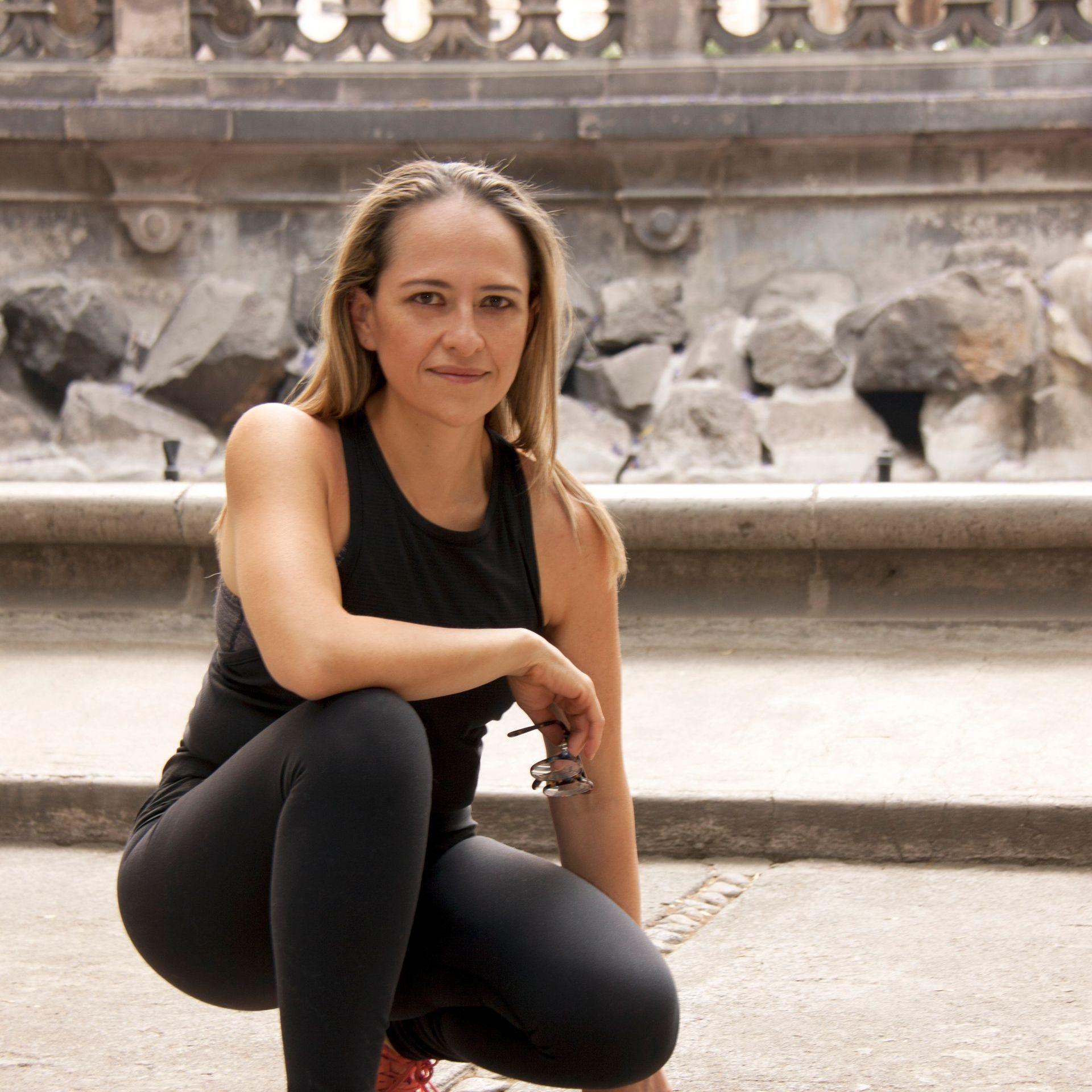
Hola, I'm coach Kari
Many of my athletes come to me because they no longer enjoy running, whether due to injury or simply because they're not improving their performance. I want to help you break out of this vicious cycle and enjoy running again. Through my running coaching, you will improve your techniques and become a stronger runner.
Download your running roadmap to 5k,10k or your first marathons (EN/ES available) 👇